Sunday, August 13, 2006

And Also Starring...

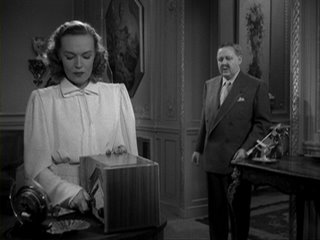
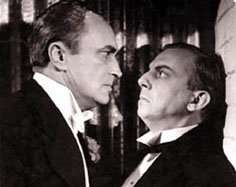
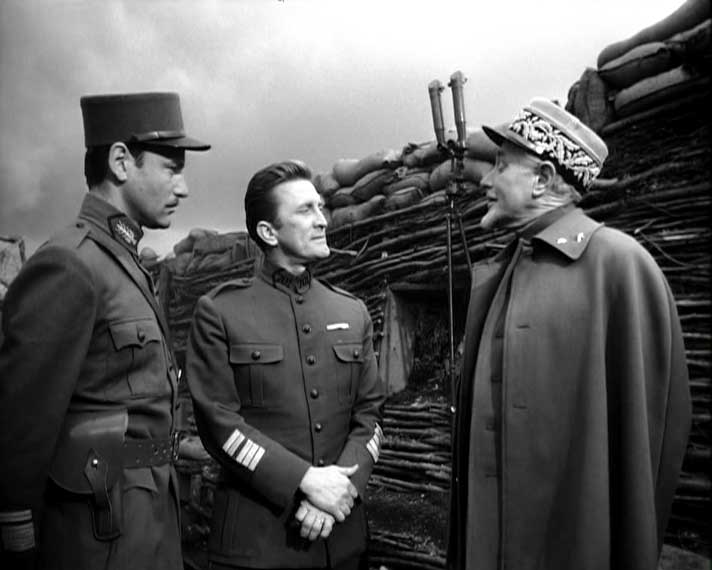
George MacCready (r) with Kirk Douglas and Richard Anderson in Paths of Glory

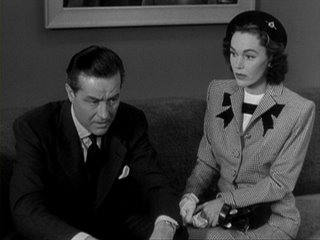
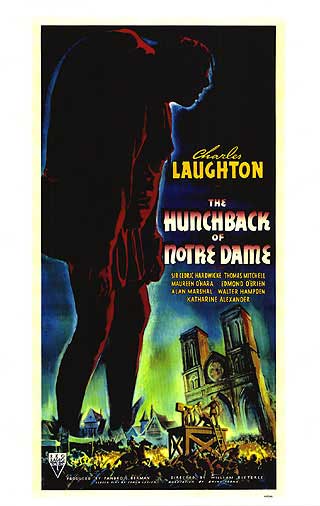
Whilst writing away on The Big Clock, I got to thinking about the great character actors. In the case of that movie, consider George MacCready, who plays Charles Laughtons’ icy second-in-command Steve Hagen.

MacCready is one of those faces that you see pop up all the time in secondary roles, and in a lot of cases, they are as memorable as the big names.

Think of Gilda, and Rita Hayworth’s cuckolded husband – That was MacCready. He was also the unscrupulous General Mireau in Paths of Glory. There were a ton of other lesser-known roles, usually as a cool-headed baddie, such as the underrated George Raft thriller Johnny Allegro.

In what will be a regular feature here at filmscreed, I will take a few moments to give props to some of these supporting players.

The Big Clock

The motif of the clock is everywhere in John Farrow’s great 1948 Noir. Well, no shit, Sherlock! Seriously, though, the motif is not only limited to the clock tower where much of the action takes place. There’s a small broken clock, which provides a vital clue. A character gets into trouble because he doesn’t check his watch. A clock is even used as a murder weapon in this one.

The film stars Ray Milland as George Stroud, the editor of a crime magazine. Stroud is happily married, although he hasn’t been able to shake loose from work to go on a honeymoon yet. When we meet his boss, we understand why. The magazine mogul Earl Janoth (Charles Laughton) is a man who likes to be in control, and micromanages his life right down to the minute. This fact is given to us before we even lay eyes on Janoth. A tour group is asking questions about Janoth’s clock tower, and someone asks what happens when the clock stops. Stroud overhears and replies:

“Mr. Janoth would never allow that to happen.”

The film opens with the often-used trick of dropping us into the story and then looping back to tell us how we got there. In this case, Stroud is hiding out in the darkened corridors of the Janoth skyscraper. His voice-over wonders how he got here in just 36 hours, and the camera finds a calendar/clock on the wall – and dissolves to three days earlier. It’s corny but effective, and is completely in keeping with the clock theme of the film.

Janoth is visited early in the film by his mistress Pauline, and he is furious with her for using his private elevator to come up to his office. You see, it’s HIS elevator, and he can’t have someone else using it after he’s told her not to. She is clearly not happy with him, either, and says so.

Pauline soon finds herself sitting next to Stroud at a bar. She knows who he is, and the two of them talk about their common ground – Janoth. This scene is simply a set-up, but it establishes a bit about Stroud. Pauline is clearly flirting with him, and although he tells her that he is happily married, he doesn’t discourage her. He even agrees to an impromptu palm reading, and this is what is going on when his wife Georgette (Maureen O’Sullivan) walks into the bar. So, we see that Stroud is a quintessential Noir male – He should know better, but what the Hell.

The chill that Stroud got from his wife in the bar is amplified when Janoth then wants him to cancel his vacation to follow up on a hot story that is in the works. Stroud is having none of that, because this vacation was going to be the aforementioned honeymoon. He threatens to quit.

Stroud then gets a call in his office from a “palm reader”, and accepts an invitation for a drink from Pauline. Again, he does something that he must know is unwise. This time the one drink turns into several, and leads to a drunken search for a green clock and the purchase of a painting. Stroud wakes up the next morning on Paulines’ couch, having missed his vacation flight with his wife. The drunken binge has clearly not ended with sex, but what it has done is establish a trail, which will fuel the films brilliant corkscrew plot.

Pauline has to rush Stroud out the door when see sees Janoth coming, and the two men see each other in the hallway, although Janoth can’t tell who the other man is. He does, however, know that he came from Pauline’s apartment, and this leads to a violent confrontation between Janoth and Pauline. He rages on her for her sexual dalliances, and she turns it back to him

“Look at you!!!! Who would have you??”

The camera zooms to Laughton’s face as she screams at him, and the suggestion that he is physically unworthy causes him to snap. He kills her with a sundial bought by Stroud the night before.

Laughton is a marvel in this film, as he was in most of his films. Janoth is a man who wants to control things, and his obsession takes extreme forms. He has a man’s pay docked for leaving a light on. At a board meeting he says, “You have one minute to tell me how to get 50,000 new subscribers.” This man has a clock for a heart and would happily admit to it. The thing that sends him into a murderous rage is the suggestion that his sexual machinery is sub-par.

Now we come to where “TBC” really soars – The cat-and-mouse game between Janoth and Stroud. To recap – Stroud has spent the night with Janoth’s mistress. Janoth knows that someone has spent the night but not who. Janoth has killed the mistress. Stroud doesn’t know that she is dead. Janoth puts Stroud of his crime magazine on the path of the mystery man. This plot is brilliantly conceived, with the two men maneuvering right in plain sight of each other. I think that the ultimate compliment is this: It’s complicated, yet easy to follow.

The great Film Noirs were often characterized by a mood created through cinematography and set design, and this one is no exception. It was lensed by John Seitz, whose resume includes The Lost Weekend and Sunset Boulevard, and he has a great palette here. The Janoth building is one of the great locations, and the camera gives it a cold, impersonal feel, lingering on its hard right angles and sterile marble hallways.

If you haven’t seen the movie, I won’t spoil it for you, except to say that all the plot threads come together in a terrific manhunt through the Janoth building, and we come back full circle to where we started the film. Just like a clock.

Saturday, August 12, 2006

The Marquee (Bresson Division)

On this Date

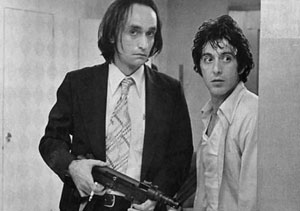
John Cazale’s life ended early. He was only 43 when he succumbed to cancer in 1978, and you might reasonably expect an actor with only five films to his credit to end up in the dustbin of history.

Cazale is much more than a footnote, however. The five films in question are: The Godfather, The Conversation, Godfather II, Dog Day Afternoon, and The Deer Hunter. An astounding batting average, wouldn’t you say?

He is best known, of course, as weak Fredo Corleone, who fumbled with his gun, betrayed the family, and ended up dead at the hands of his brother Michael. My own favorite Cazale role, however is as Al Pacino’s accomplice Sal in Dog Day Afternoon. Sal is a pretty dim bulb, but he has a touching naiveté, and his death in that film is absolutely heartbreaking.

John Cazale would have turned 71 today.

Wednesday, August 09, 2006

On Location

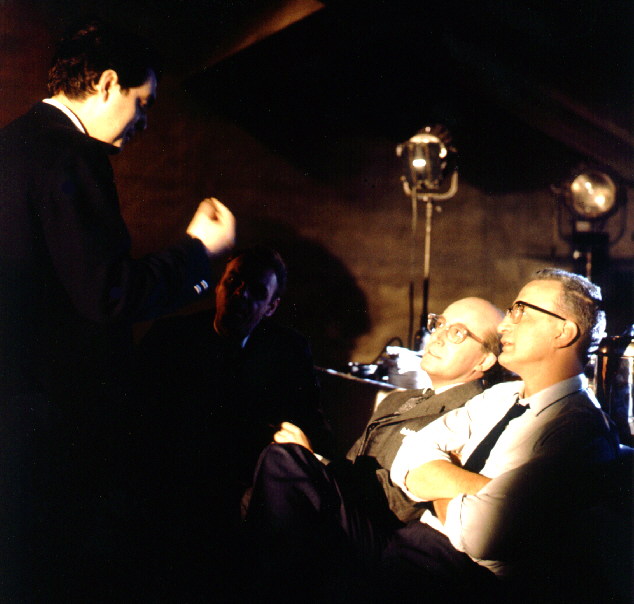
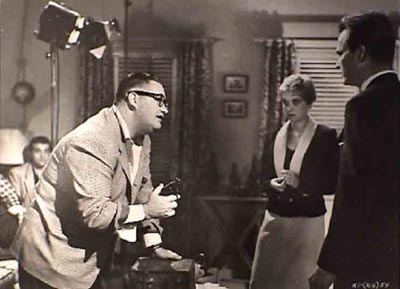
Stanley Kubrick tries to convey his essence to Peter Sellers and George C. Scott on the set of Dr. Strangelove.

Tuesday, August 08, 2006

The Marquee

aka "The Big Clock"
(commentary coming soon.....)

Wednesday, August 02, 2006

On Location

Louis Malle teaches stuff to Susan Sarandon and Burt Lancaster on the set of Atlantic City.

Tuesday, August 01, 2006

The Marquee

Stephane Audran. What more need I say?

Tuesday, July 25, 2006

Between the Covers

It was during the depths of the Great Depression that bunch of American Jewish youths sat down and created a whole new art form. The art form was the comic book, and the youths had names like Joe Shuster, Jerry Siegel, Bob Kane, and Jack Kirby. This art form flowered under the scepter of European anti-Semetism, and one of the peculiarities of the Golden Age superheroes was that they are without exception powerful Aryan types – Exactly like Hitler wanted to create.

Michael Chabon’s novel plants itself firmly in the middle of this explosion of creative energy. The title characters are the creators of a super-hero called The Escapist, and everything about these two and their hero has the feel of authenticity about it.

Sammy Clay is the imaginative young son of a former vaudeville strongman. His cousin Josef Kavalier is a young Czech who left behind a fledging career as an escape artist and a family at the mercy of the Nazis. Indeed, the approaching war casts a pall over everything, including the comics that leap from the pencil of Joe. Kavalier needs to get his family to America, and throws himself into the artwork in a frenzy. His tales of the Escapist smashing Nazi agents become a hit.

For Joe, the work is just a means to an end – The end being getting his younger brother Thomas out of Czechoslovakia. His fury at Germany finds its way unto the panels of his comics – and also into everyday life.

“On the southbound platform, a few feet from the cousins, stood a dark glowering gentleman – reading the cut of his topcoat, or some indefinable emission radiating from his chin or eyes or haircut, Joe felt certain that he was German. This man was giving them the fish-eye. Even Sammy had to agree afterward that the man had been giving them the fish-eye. He was a German right out of a panel by Joe Kavalier, massive, handsome in a prognathous, lupine way, wearing a beautiful suit. As the wait for the train dragged on, Joe decided that he did not like what he considered to be the superior manner in which the theoretically German man was looking at him. He considered a number of possible styles, in German and in English, of expressing his feelings about the man and his fish-eye. Finally opting for a more universal statement, he spat, as if casually, onto the platform between him and the man. Public spitting was common enough at the time in that city of smokers, and the gesture might have remained safely ambiguous if Joe’s missile had not overshot its mark. Spittle frosted the tip of the man’s shoe.”

And that is how Joe Kavalier comes to get beaten up by Max Schmeling. Other icons of the time, such as Orson Welles and Salvador Dali make small appearances, but this novel is really story of regret and of families lost and found. It’s about two talented cousins, and a woman who loves one, yet marries the other, and about a man trained to escape from anything who tries to escape from his life, and finds that he can’t.

Friday, July 21, 2006

On Location

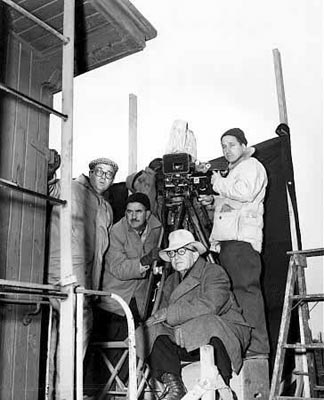
Fritz Lang (seated) on the set of Human Desire.
I'm sceptical as to whether Fritz should be wearing a white hat.

Thursday, July 20, 2006

Landscape in the Mist

The quest undertaken by the adolescent heroes of Theo Angelopoulos’ 1988 film "Landscape in the Mist" gives us a bad feeling right off the bat. The pair – 14 year old Voula and her 5 year old brother Alexander are looking for their father, without knowing who or where he is, apart from the fact that he is in Germany. We know that, but they don’t appear to have given it a second thought.

The two children have run away from home, and the first time we see them, they are rushing to the station to catch a train to Germany. A vendor sees them and jokingly asks, "Are you here again?" This makes sense a few seconds later as the two lose their nerve and go back home again. Why are they running away? There is no indication that their mother is abusive – We don’t even see her. The movie doesn’t spend any time establishing what they’re running away from. It is more interested in what they are running to. The children have come up with their own ideas about the missing father, and Alexander dreams about him often.

The pair actually manages to get on the train on their next attempt, and manage a short ride before they are thrown off for not having tickets. It’s at this first stop that we meet their uncle (the mother’s brother) It’s from this uncle that we get the crucial information that the father that the kids are seeking doesn’t even exist. He’s a fabrication by the mother to hide their illegitimacy from them.

There’s a bizarre and heartbreaking sequence at this first stop, as well. The children are walking at night, when out of nowhere a tractor drags a dying horse and drops it literally at their feet. As they examine the stricken animal, and Alexander breaks into tears, a rowdy wedding party troops out of a hotel in the background, and parades off into the night. No one in the party even notices the scene in front of them. The metaphor is clear – The children are on their own, and the world takes no notice.

Soon afterward, they get a ride with a friendly young man named Oreste, who is part of a travelling theatre troupe. He feeds the children and shows them his costumes, and Angelopoulos is clearly establishing him as a surrogate father figure.

There is a second surrogate, who is not so kindly, however. A truck driver picks the two up and buys them lunch. He seems nice enough, but soon pulls the truck over and forcibly pulls Voula into the back with him. This scene is restrained, but is nonetheless harrowing, as the camera stays back and shows only the hanging tarp on the back of the truck. A couple of cars pull over in the background, and we think that they might deliver the girl from her attacker, but they drive off again. The driver gets out, and them slowly we see Voula’s legs come out. She sits on the edge of the truck, and finally we see a trickle of blood come from between her legs.

The children cross paths with Oreste a second time, and it quietly becomes evident that the strange father/child bond works both ways. Oreste has his theatre group, but appears to always travel alone. He has stated early on that he is scheduled to join the army soon, and the time with the children seems to salve a deep loneliness in him as well.

We now come to a surreal scene, which is the most memorable in the film. As Oreste sits on a dock, a gigantic stone hand starts to rise up out for the water. We begin to hear the sounds of a helicopter, and when the camera goes back to the statue, it is attached by cable to the helicopter. It rises out of the water, and is carried away. This scene makes no sense from a literal standpoint, as the hand rises by itself, and the chopper seems to magically become hooked to it after the fact. So what does it mean? The image, I think, is meant to indicate the loss of love and companionship. The sight of the hand drifting away is a dream-like wave goodbye, and we later see this motif repeated when they say goodbye to Oreste on a deserted highway.

This film carries a melancholy air about it. When we first meet Voula and Alexander, logic dictates that there can’t really be a happy ending to their journey. They left their home lured by the possibility of meeting a loving father that doesn’t exist. The people that they meet on the way are much like them, in that they need to establish some kind of connection.

The eventual arrival in Germany in a fog-bound rowboat concludes the film on an uncertain note. The children are alone even then, and they struggle to make out detail in the mist. Eventually a tree comes into focus, and the film closes on an image of the two of them clinging to its trunk. The viewer wonders what will become of them in this strange country, all alone in a world that doesn’t care how vulnerable they are. They see the tree, but all we see is the fog.

Tuesday, July 18, 2006

Sunday, July 16, 2006

The Great Northfield Minnesota Raid

Somewhere in the late sixties, the term “Revisionist Western” entered the filmic vernacular. The old, traditional Westerns of John Ford and Howard Hawks were on their last legs, and the new ones that were being made tried to look at things with fresh eyes. Films like “Little Big Man”, “Soldier Blue”, and “Posse” took the Western template and superimposed the values of the sixties unto it. Some of these films were good, and some weren’t, but they all had the conceit that they were taking the Western in new directions.

This idea was, however, completely wrong. It begins with an unspoken assumption that all the Westerns that came before were safe, cookie-cutter product, and that they didn’t really make social statements. Sorry, no. What is John Ford’s “The Man Who Shot Liberty Valance” if it’s not revisionist? What about “Cheyenne Autumn”, or “Two Rode Together”? Hawk’s great “Red River” injected Oedipal shadings into a cowboy setting. Hell, you can make the case for Ford’s “Stagecoach” as a revisionist Western, with its comments on class and social hypocrisy, and it was made in the thirties!

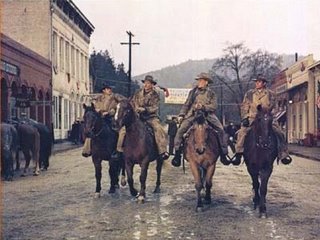
I said above that some of the “new” Westerns were good, and I’d like to comment on one of the best - Philip Kaufmans’ “The Great Northfield Minnesota Raid”, from 1972. This film is built on the Jesse James saga, but it isn’t interested in good guys and bad guys. In this story, there’s enough bile for everyone.

The film opens in the mid 1870s when a bill was in the Missouri legislature that would have offered an amnesty to the James-Younger gang. The gang has staged several high profile robberies, but they have a lot of public support, and a Robin Hood-esque appeal. Cole Younger (Cliff Robertson) is content to lay low and wait for the amnesty to come into effect. Robertson plays Younger as a world-wise sage to whom crime is only a job. On the other hand, Jesse James (Robert Duvall) sees it as a holy calling, a crusade. The Civil War is still going on for him.

Early on, Pinkerton agents ambush Younger and some of the others, and Younger is wounded. James takes this opportunity to plan a daring raid on a bank in the far-off town of Northfield, Minnesota. James is portrayed as a fraud throughout the film, and never more so than here, where he goes into a trance-like state to conjure up the name of the town they will be going to. It is later revealed that Younger had mentioned Northfield before.

The main dynamic in the film is the relationship between the two heads of the gang, Younger and James. Younger is the man of the future, who can see ahead to the time when he won’t have to rob banks. James, on the other hand, is caught in an endless loop of past crimes to be avenged. We hear James recount his time with the Confederacy, and his role with Merrill’s Raiders in the Lawrence, Kansas Massacre.

“They say we killed 1000 Yankees there.”

Younger gets up off his sickbed and goes to try to prevent the Northfield raid, which would jeopardize their amnesty. Hopping a train on the way, Younger learns that the amnesty has been defeated, and thus he decides to go ahead with the raid.

The train ride has gotten him to Northfield ahead of James, and he learns that the bank in question is broke. Younger comes up with the idea of posing as a cattle dealer and fooling the townspeople into putting their savings back into the bank. The bank manager is an accomplice in this, little realizing that he is facilitating the robbing of his own bank.

As it was in “The Wild Bunch”, one of the underlying themes in “TGNMR” is the encroachment of progress and how the old ways are changing fast. There is a little scene where a steam tractor comes around a corner, and the members of the gang are visibly startled by it. A calliope is set up on the street in front of the bank, and the struggle to get it to work mirrors the efforts of Younger to set up his robbery.

The robbery itself is a disaster, as James morphs into a twitching psychopath and kills a bank employee. Two members of the gang are killed, and Younger and the rest go on the run. The pursuit and capture of Younger and his gang are fairly perfunctory, but what is notable is the way they are paraded through Northfield in a cage, like animals. The people come out in droves to gawk and cheer.

Jesse and Frank James, meanwhile have escaped and as they escape on a wagon we get a chilling indicator of the fate of an elderly woman who sheltered them earlier in the film. Jesse doesn’t have time for remorse, however, because he is already planning who will be in his new gang. In his mind, the war rages on.

On this Date

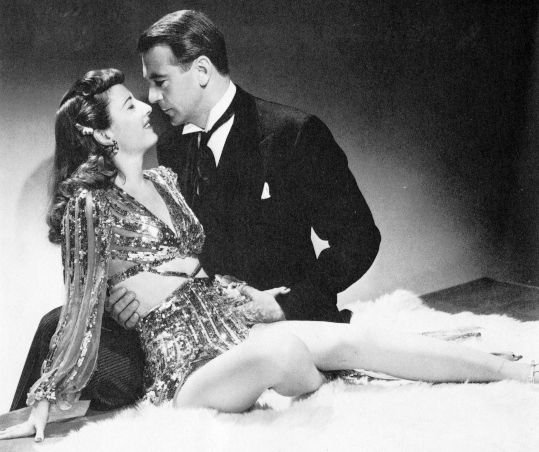
I came upon Barbara Stanwyck by going backwards. My first memory of her was as Victoria Barkley, matriarch of TV’s “The Big Valley”. It was a bit of a revelation when I became a cinephile and started to see her at the height of her powers, in stuff like “The Lady Eve”, “Meet John Doe”, “Stella Dallas”, “Sorry, Wrong Number”, etc.

The above photo is from 1941’s “Ball of Fire”, the Snow White and the Seven Dwarfs send-up directed by Howard Hawks and written by one Billy Wilder. Barbara owned the film as the singer and mob moll Sugerpuss O’Shea, but it was her next Wilder script that proved to be her touchstone role – as Phyllis Dietrichson in “Double Indemnity”. When I watch that film, I’m always amazed at the different notes that she hits – Sexy, conniving, vulnerable, strong.

And yes, I know those last two are contradictory.

Barbara Stanwyck was born on this date in 1907.

Friday, July 14, 2006

On Location

Robert Aldrich accentuates a point to Gaby Rodgers and Ralph Meeker on the set of Kiss Me Deadly.

Tuesday, July 11, 2006

Contraband

I have to confess that I have a special fascination for films about World War II that were actually made during the war. Many of them seem to have a certain authenticity that came from living in that time and in those circumstances - An authenticity that can’t really be re-produced after the fact.

The legendary "Archers" – director Michael Powell and writer Emeric Pressburger made "Contraband" in England in 1940, and it’s a classic example of what I talked about above. Set in London during the Blitz, this is a film that knows details such as having a maitre d’ ask a diner if he is bringing a gas mask into the dining room.

The film opens in a small English resort town, as the Navy sees a Danish ship passing, and gives the order for it to be detained. The ship’s captain is Anderson (Conrad Veidt) and he’s a tough cookie. He first refuses to obey the order to stop, and when he finally does, doesn’t go to meet the boarding Brits, instead making them come to him.

We get to briefly meet some of the passengers, most notably Mrs. Sorenson, a strong-willed divorcee played by Valerie Hobson. She and the Captain butt heads early on over her refusal to wear a life jacket, and one of the delights of this film is watching two smart, stubborn people banter.

After an interview, the British officers develop sufficient trust to give Anderson a pair of shore passes, for him and his First Officer Skold. When it comes time to go ashore, the passes are gone and Sorenson and a talent agent named Pidgeon are gone with them. Anderson is furious, and he and Skold head ashore in a small skiff to find them. A schedule torn out of a paper leads Anderson to a train, and he finds his quarry hidden behind an open copy of Variety. He loses Pidgeon, but decides to keep Sorenson close to him.

A trip to her aunt’s house reveals a surprise – There are men waiting for her. There’s a marvelous scene where a German agent who somehow manages to be both warm and menacing questions Sorenson. Anderson listens to this from a couch, and this is how he discovers that she and Pidgeon are agents carrying info about German spy ships.

Anderson and Sorenson are tied to together under the watchful eye of a surveillance camera. The way they plot their escape together is one of the centrepices of the film. Watch as they position themselves so that the camera can only see her, then listen to the sounds of the building. There is someone playing a banjo and a fine male singing voice, and Sorenson gets and idea of the layout of the building from listening to the footsteps above her. Anderson manages to wriggle out of his bonds, and in an inspired plan, starts turning the lights in the building on. London being in curfew and under a blackout, this brings the police to the door, and Anderson gets out.

The problem is, since the entire city is in blackness, he doesn’t know where he was being held. This leads to a search of nightclubs, looking for one with a banjo player and a male singer. He seems to have found the right one, then is told that they have never had a male singer. He is just about to leave, when a female singer starts into a song – A singer with a decidedly masculine voice. Bingo!

The blackout plays a pivotal role in "Contraband." So much so, in fact, that when the film was released in America, it was called "Blackout". The final confrontation with the Nazi spy takes place in the dark; with both men feeling their way around, and trying to get a shot off at one another.

Powell and Pressburger are best known in America for the masterpieces they created a few years later, like "The Red Shoes", "Black Narcissus", and "A Matter of Life and Death", and Powell himself essentially had his career destroyed with "Peeping Tom" in 1960. These films are all high points, but they are by no means the only ones. "Contraband" is one of their notable early films, and it’s a terrific, tight little thriller. It sure feels like it was made by someone who knew what being at war was like.

Note: The credits indicate that Deborah Kerr has a small uncredited role in this. I sure didn’t notice her. If anyone else has, let me know.

Sunday, July 09, 2006

On Location

The principals of Psycho huddle up

Saturday, July 08, 2006

Between the Covers

It was a decade ago that I first ran across Mark Helprin. The novel was “Memoir From Antproof Case”, and the story of its nameless, coffee-hating protagonist grabbed me in a big way. Imagine a narrator who has been a murderer, a patient in an asylum, a WW2 ace, and a thief who rips off millions in gold bullion. That’s the way things are in Helprin’s universe – The adventures are big, bawdy and rotated a little bit off-kilter.

So here we are again with “Freddy and Fredericka”, his first novel in a decade. We know the title characters already – The Prince and Princess of Wales - He stiff, intellectual and hound-eared, she blond, beautiful and vacuous. Due to their penchant for embarrassing the Royal family, they are banished to America until Freddy can prove himself capable of assuming the throne.

The duo’s story is like “On The Road” filtered through Gabriel Garcia Marquez, and begins with them being dropped naked into New Jersey, and includes stealing art, fighting forest fires, working in a Medieval Times-themed restaurant, and in the novels’ inspired centerpiece, running the campaign of the foppish Presidential candidate Dewey Knott.

I laughed out loud at this novel. Often.

“Freddy had been to all the major places in America that were even vaguely like England. In favour of playing polo in Virginia or making a speech in Cambridge, he had skipped the West except as a place, in the late fifties, to kill large animals, and was unfamiliar with it other than by looking down from the Concorde on his way to Los Angeles or San Francisco. And these, as far as he was concerned, were cities with a tenous hold not only on America but upon the earth. The first time he had seen San Francisco he has come from the sea on Brittania and he had assumed he was hallucinating. He loved it, but he never stopped believing it was only a puff of ether. He had gone inland in California, once, to visit a walnut ranch, but apart from that had known nothing other than a strip of Pacific coast ten miles wide. Now they were in the West that neither he nor Fredericka had experienced except as a terra-cotta-coloured carpet so distant that it might have been the textured wall of one of the neopalaeolithic buildings Freddy so distained.”

The Marquee

Wednesday, July 05, 2006

On This Date

Take a moment to pour yourself a drink – Tequila would be best – and join me in a toast to the late, great, Warren Oates. Warren would have turned 78 today, and they aren’t making his type anymore.

When he was finished with the Marine Corps, Warren decided to try his hand at acting. This was in the 50’s and the golden age of TV Westerns, and Warren found his niche playing heavies on various series.

At the same time, Sam Peckinpah was honing his skills on such series as "The Rifleman", "The Westerner", and "Trackdown", and he and the fledging actor struck up a friendship. Peckinpah eventually moved to the big screen and when he made his early masterpiece "Ride The High Country", Oates was with him as one of the white trash Hammond brothers.

In the amalgam of beautiful moments that are "The Wild Bunch", my favorite belongs to Warren. When William Holden’s Pike comes to collect him to go and get Angel, their conversation is a marvel of economy. Pike says simply "Let’s go!" and Warren gives this wry little smile and replies "Why not?" Damn right.

My personal favorite Oates role, however, isn’t with Peckinpah – It’s in Monte Hellman’s "Two-Lane Blacktop". Driving a cool yellow GTO, Warren steals the film out from under its boring-as-sawdust headliners, James Taylor and Dennis Wilson. As a lonesome hot-rodding knight errant, he’s the one whiff of real humanity in the film.

So here’s to you, Lyle Gorch.

Here’s a little something for the piano player.

Thursday, June 29, 2006

The Marquee

" Il Conformista" , aka "The Conformist", Bernardo Bertolucci, 1970

Tuesday, June 13, 2006

Monsieur Klein

The title hero of Joseph Losey’s 1976 film “Monsieur Klein’ is a wealthy Parisian art dealer who seems to not have a care in the world. The greatest horror of the twentieth century is occurring all around him, and while he’s not oblivious, it means no more to him than the opportunity to make money.

The thing is, although the film revolves around the Holocaust, it never really talks about it. Hitler is never mentioned, and German soldiers are seen only very briefly. In the film’s opening sequence, a naked and obviously frightened woman is undergoing a humiliating physical exam. The doctor spends a lot of time examining her face, and finally comes to the conclusion that the woman shares some common features with the “Semite” race. This is masterful, as it quietly establishes that the Jews are starting to be rounded up – with the co-operation of the French.

Mr. Klein (Alain Delon) is first introduced to us off-camera as a gentleman comes to his door to sell a painting. Again, Losey feeds us information in an indirect way, as we listen to the conversation. It’s pretty easy to gather that the man is Jewish, and needs raise some money quickly. Klein knows this, and coldly lowballs the man on price. On his way out, the man says derisively that Klein is taking advantage of people, and Klein retorts that “Sometimes, I don’t even want to buy.”

A pivotal moment ends this small exchange, as Klein sees a small Jewish newspaper on his doorstep, and tells the man that he’s dropped it. The man reaches into his jacket and pulls out his own copy.

Klein makes a trip to the offices of the magazine to try to stop delivery to his address, and this is again a beautifully done example of how we are given information by characters who-tap dance around what they really want to say. Watch Delon’s face when he is told that the magazine’s subscription list is in the hands of the Prefecture of Police. This is the first small crack we see in Klein’s cool façade. There’s also a terrific little exchange as the magazine manager tells Klein that someone may have given him a gift subscription.

“No one would play such a joke on me”

“Do you think we are the subject of jokes?”

The trip to the magazine tells him, however, that there is another man with the same name, and a visit to the man’s address turns up an abandoned apartment and a blurry photograph of the other Klein on a motorcycle.

One day, a love letter arrives that is intended for the other Klein, and it leads Delon to a rich family on the country who are confidantes of the other Klein. As Klein is led into the house, we see that some of their paintings have been taken down off the wall. This isn’t pursued, but it raises the possibility that Klein may have profited from some of their artwork, as well. It also suggests that the other Klein is Jewish. The woman of the house (Jeanne Moreau) comes to Klein at night to retrieve her letter – She is having an affair with the other Klein, and in fact goes out in the middle of the night to meet a man on a motorcycle.

The French police ask for birth certificates of Klein’s grandparents, and he sends his lawyer Pierre for them. At this point in the proceedings, he might be well advised to get out of town, but he is obsessed with finding the other man, and gives the impression that he doesn’t really believe that anything bad is going to happen to him.

The adjective Kafka-esque is often used to describe this film, and it’s an apt description. The French police are investigating Klein, and the other Klein is using him as a decoy. The man on the motorcycle is likely the other Klein, and there’s another instance where Delon is in the same bar with his man, and misses him. He never does actually see the guy. A search for a woman in the photo is maddening; as he is told her name is Isabelle, then Cathy, and then finally, Francoise.

Finally, he comes to the conclusion that he has to get away, and there is a delicious irony in a scene where his lawyer asks about the value of his stuff.

“About 10 million”

“How about 7 or 8?”

When the opening credits roll on this film, they are over a painting – A painting of a vulture pierced by an arrow. This same painting is sold at an auction later in the film, with Klein in attendance. We wonder if he senses the parallels to his own life. He has made money off desperate Jews, and in so doing, given them the means to escape. When his time comes, after he has been rounded up and loaded on a train bound for Germany, we again hear his narration from the opening meeting with the old Jewish gentleman selling his painting. Then the doors slide shut, and the vulture is carried away.

Friday, June 09, 2006

Between the Covers

Fraser’s account of the British campaign in Burma is a vividly remembered time capsule, and also a sobering reminder of the mind-set men shift into when they are asked to kill other men. Just nineteen years old when the book’s events occur, Fraser details the daily lives of his beloved Nine Section (The "Black Cats"), both in the swirl of fierce and bloody battle, and the quiet down moments.

Modern readers may be put off by Fraser’s seemingly casual racism towards the Japanese. He admits to it, and is refreshingly honest about its roots. His thoughts on the bombs dropped on Hiroshima and Nagasaki are telling – He is stridently unapologetic, yet can also write, "If it was not barbaric, then the word has no meaning."

The opening lines:

"The first time I smelt Jap was in a deep dry-river bed in the Dry Belt, somewhere near Meiktila. I can no more describe the smell than I could describe a colour, but it was heavy and pungent and compounded of stale cooked rice and sweat and human waste and ….Jap. Quite unlike the clean acrid wood-smoke of an Indian village or the rather exotic and faintly decayed odour of the bashas in which the Burmese lived – and certainly nothing like the cooking smells of the Baluch hillmen and Gurkhas of our brigade, or our own British aromas. It was outside my experience of Oriental stenches – so how could I know it was a Jap? Because we were deep inside enemy-held territory, and who else would have dug the three bunkers facing me in the high bank, as I stood, felling extremely lonely, with a gallon tin of fruit balanced precariously on one shoulder and my rifle at the trail in my other hand."

Monday, June 05, 2006

Pierrot Le Fou

"It’s possible to hate half or two-thirds of what Godard does – or find it incomprehensible – and still be shattered by his brilliance."

Pauline Kael

Sitting down to dissect a Godard film is like trying to pick fly shit out of pepper with boxing gloves on.

Me

Seriously, when you start becoming a cinephile, you will run into Jean-Luc Godard pretty early on. He was one of the vanguards of the French New Wave, and his influence is immeasurable. He is, however, a tough nut to crack. He takes all your preconceived notions of what a movie should be, and tosses them out the window. I’ve seen most of the stuff from his great early period, and I’m mixed – There are films I like a lot – "Band of Outsiders", "Week-End", "My Life to Live", and " Les Carabiniers" - and ones I’m lukewarm to, like "Alphaville", and "Masculin-Feminin". The one that I keep going back to, however, is "Pierrot Le Fou", from 1966. Of all his stuff, I think this one is the most fun, and was made with the lightest touch.

The film opens with Jean-Paul Belmondo’s unemployed TV exec Ferdinand getting ready to go out to a party with his wife. On the way out, he meets a baby-sitter (Anna Karina) hired by his wife, and there is a small, yet noticeable recognition as they shake hands. More on that later. The party is Godard at his best. These people bore Ferdinand, and as he moves around the room, Godard has the characters talking in TV commercial blurps instead of conversational dialogue.

"The new Alfa-Romeo with its 4-wheel disc brakes"

"I use Odorono after my bath for all-day protection"

Ferdinand leaves, and goes home to find Marianne the sitter sleeping in a chair. He offers to drive her home, and here it’s revealed that the two have been in a relationship. The talk in the car, first with the camera on her as he speaks, then on him as she does, and they basically just run away together.

"It’s in this extended road trip that "PLF" really takes wing. The two wake up at her place, and as they talk, the camera pans past a dead body on a bed, and several machine guns laying about the place. These things aren’t remarked upon, but as they leave the narration goes into a fragmented call-and-respond mode between Ferdinand and Marianne. "This is a story" "All mixed up",etc. From these bits, we start to get an insight into Marianne. She has a brother Paul who is a gunrunner, and she is in some kind of trouble.

As the couple travels into southern France, the film starts to give the sense of being a story being invented, rather than a narrative of events. At one point Belmondo turns and talks directly to the camera. Karina asks him whom he is talking to, and he replies "The audience". Then there is the matter of his name. Marianne always calls him Pierrot, and he, without fail, responds "My name is Ferdinand." In several cases, the characters use the logic of movies, at one point Marianne even says "I saw this in Laurel and Hardy". There are references to "Johnny Guitar" and "Pepe Le Moko", and Sam Fuller even appears as himself at one point.

Godard could usually be counted on to include some kind of political diatribe in his films, which would often have the effect of grinding them to a halt. Think of the garbage men in "Week-End" or the blond firing squad victim in "Les Carabiniers". Here we get the Viet Nam war played as a short moneymaking skit by Ferdinand and Marianne for the benefit of some American servicemen. In this case, it works OK.

Marianne’s troubles eventually catch up to her. Ferdinand is surprised by a couple of hoods looking for her, and they resort to the most unusual mode of torture this side of Monty Python. Ferdinand is put in the bathtub, and they spray water in his face. It seems that Marianne has killed one of their colleagues (The guy on the bed!), and stolen money from them. He tells them where to find her.

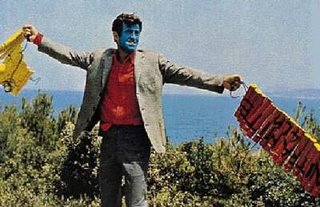
The concept of watching something that is just an artifice is brought home as we meet Paul, and realize that he’s not her brother at all, and that poor Ferdinand is just a rube. He gets his revenge in a finale that is arguably Godard’s best. Certainly, the most memorable image in "PLF" is of the deranged Ferdinand, face painted blue, waving dynamite in the air. He has decided to go out, literally, with a bang, and even lights the fuse. It’s somehow fitting that he changes his mind too late, as it burns down to nothing.

The Marquee (Brass Knuckle Division)

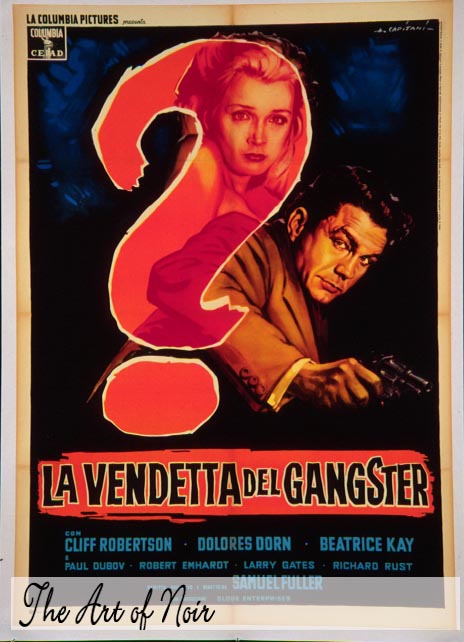
aka "Underworld U.S.A." - Sam Fuller, 1961
A future commentary?

Sunday, May 28, 2006

Saturday, May 27, 2006

Between the Covers

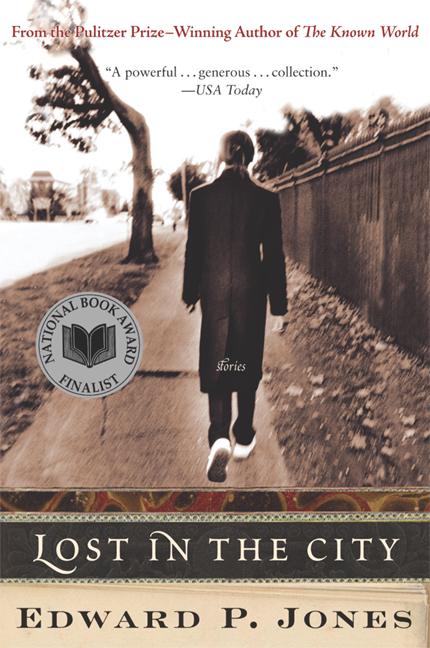
Washington, D.C. is home for the souls who populate Edward P. Jones’ "Lost in the City". It’s a terrific collection of fifteen short stories, and Jones paints his people with quick, powerful strokes. There’s the sharp, mouthy Cassandra with her stolen car in "The Night Rhonda Ferguson was Killed". There’s Caesar, the young hood who is at the center of "Young Lions." And there’s Horace, the vain widower who lets his life careen out of control in "A Rich Man."

The stories all revolve around black families in D.C., and many of them are set in the fifties and early sixties. These are not necessarily harsh stories of big city life, although that reality is always simmering in the background. Jones weaves a story out of something as simple as a child’s first day of school ("The First Day") or a chance meeting with a dreadlocked man at the subway station ("An Orange Line Train to Ballston")

"One night, all of us - me, Lonney and his mother and Brenda and her parents – were sitting arouind his living room, talking about the wedding and everything. Someone knocked on the door and Lonney opened it. It was his old man, standing right there tall and straight as a lamppost in his uniform. You know something’s wrong when a man doesn’t even have a key to his own house."

From "The Store"

A nod to Lance Mannion, who made me want to read this.

Thursday, May 25, 2006

Cyclo

The Cyclo boy is young – he looks like a kid who might deliver your paper. You watch him for a while, and it occurs to you that while he’s just a kid, he isn’t youthful. There’s not even a hint of carefree childishness or immaturity.

This starts to make sense when we meet the rest of his family. He lives with his elderly grandfather who goes out every day and repairs bicycle tires, even thought his health is failing. There’s an older sister who carries pails of water to restaurants for a living. And there’s a young sister of not more that 7 or 8 who has her own full-time job shining shoes.

"Cyclo" is set in Ho Chi Min City, Viet Nam, and it is the story of the Cyclo boy and his sister and how poverty forces them into crime and degradation.

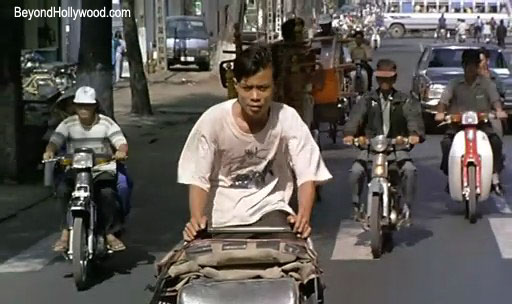
The opening shot in the film is a head-on shot of the Cyclo boy at work. A "cyclo" is a bicycle taxi, and the boy is following in the footsteps of his father, who also drove one, and was killed by a car. The film is light on narration – we just watch him work, and this accomplishes two things – First, we see how difficult the job is, and second, we get a sense of the city he lives in.

Ah, yes, the city. Very seldom has a city looked grungier and more inhospitable than here. There’s a scene early on where the cyclo boy is threatened by others for working on their turf. His boss, who is known only as "The Madam" warns him that other gangs are protective of their areas.

One day, while stopping to have a leak, his cyclo is stolen, and in trying to get it back he gets beaten up. He reports this back to the Madam, and to enable him to pay for the cycle, he is put under the direction of a gang leader known as "The Poet." His indoctrination into gang life is a harsh one. One day the rest of the gang takes him to watch the handiwork of a man known only as Mr. Lullaby. Mr. Lullaby has some poor unfortunate soul tied to a chair with his face covered in clear tape, and after a bit of banter, slits the man’s throat. The Cyclo boy is sickened by this, but the killer makes him a gift of his switchblade, and the Cyclo boy lays in bed with it that night, touching his face with the knife in a strange fetishist manner.

The older sister, meanwhile, has also drifted into the orbit of the Poet. She becomes a whore, and her encounters with clients are perverse, and again, deeply fetishist. One man forces her to drink water, so he can watch her pee. Another has a foot fetish, and has her put on nylons, which he proceeds to cut off with scissors.
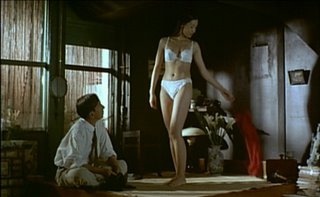
One day the Cyclo boy sees one of the toughs who stole his bike, and tells the rest of the gang. The response surprises him - "He works for the Madam, too" This is never really explored, but it raises the possibility that the bike was stolen just to get a young recruit into the illegal portion of the business.

One night the sister is taken to a fancy disco, and hired out to a wealthy yuppie. The following day, she is beaten and bloody, and one of the other whores sceams at the shaken Poet.

"You bastard! She was a virgin!"

The film cuts directly the roof of a building, where the Poet murders the violent john in a long and relentlessly bloody scene.

The Poet is the enigma of this film. There have been indications that he loves the sister, and the murder would seem to reinforce that, but it’s hard to tell. Like everyone else in the film, the Poet says very little. In any case, it’s safe to say that the rape and murder affect him deeply, because he goes home and torches his place with him still in it.

There is a recurring image of things covered with paint in this film. The Madam has a retarded son who covers him self in yellow paint. The Poet gets nosebleeds, and at one point drops of his blood fall on a white flower. The Cyclo boy tries to calm himself with pills and booze before doing a job, and instead ends up covering himself with blue paint as across the street, the Poets’ apartment goes up in flames.

"Cyclo" is peculiar and difficult film. As I mentioned above, dialogue is scarce, and we are not allowed to get too close to the characters. Cyclo boy, his sister, and the Poet live in a world where life starts out tough, and sometimes gets worse. There is an astounding shot toward the end of the film, where the camera pans over tennis courts, and a swimming pool filled with affluent types, before moving down to the street and picking up the Cyclo boy and his family on a new cycle taxi. The narration tells a story about how the family’s cat came back, and there’s an obvious parallel to the family, which went through a harrowing ordeal and managed to come out the other side. They know the truth, and they would likely tell those people playing tennis – yeah, I’ve been to Hell – It’s just around the corner.
Wednesday, May 17, 2006

Goin' Down the Road

Were you to swing a dead cat in downtown Toronto, you’d hit someone from somewhere else in Canada. The hoser version of "The Grapes of Wrath" has been going on for decades, with rural Canadians seeking a better life in the Dominions’ largest city. That’s especially been true of Atlantic Canada, where the long-term decline of the fishing industry has made things tough.

The main characters in Donald Shebib’s 1970 landmark "Goin’ Down the Road" are such people. Peter McGraw and Joey Mayle are packing their car when we first meet them, and they don’t have any doubt in their minds – They’re going to conquer Toronto. They have that youthful piss-and-vinegar- I’m bulletproof aura, and as they drive, they let us in on their plans. They have a place to live lined up with a distant aunt, and jobs waiting for them courtesy of a fellow Nova Scotian.

Their plans hit a couple of snags early on. At the aunt’s house the occupants don’t even open the door, and watch the strange newcomers from behind the drapes. It’s obvious that nobody told THEM they would be having houseguests. Then, a phone call about their jobs comes up dry as well. The first night in Toronto is spent at the Salvation Army. It’s here that some doubt starts to set in, as Joey remarks "Maybe we should go back home, Pete." Pete is having none of that, and shows him a classified page with dozens of jobs. He remarks "I’d like to work in an office. I’d have a secretary…my name on the door."

The following day marks the beginning of their job search, and we follow Pete as he goes to an interview at an advertising agency. A condescending executive questions Pete and we feel as awkward as he does. The exec remarks "What made you want to apply here?" Joey is more realistic, and at the end of the day, he informs Pete that he has gotten a job loading cases of pop, and that Pete should go and apply, too.

The boys now have jobs, and watching them work, we think that this isn’t likely much better than what they’ve left behind. Pete certainly doesn’t think so, either, and says as much.

Pete also decides that he has an eye for the sexy Nicole, who comes in a couple of days a week. The other guys in the plant lust for her, but all think she’s unattainable. Pete manages to wangle a date with her, but the date consists of her dancing with her friends, and him sitting alone drinking in the corner. After dropping her off at home, Pete sees the rest of the guys spying from the parking lot, and hides in the entrance of the building rather than have them know he hasn’t slept with her.

Meanwhile, Joey has fallen in love with a waitress named Betty, and things move pretty quickly. He reveals to Pete that she is pregnant and that he is going to marry her.

We see Pete visiting the couple at their new apartment, and he remarks on all the new stuff they have. Joey proudly tells of the great deal he got, and that he doesn’t have to pay a cent until months later. This recklessness makes us cringe, and predictably enough, the two get laid off at the plant. Sinking into poverty, Joey and Betty (and Pete) move into a run-down apartment, and do whatever they can to survive - Washing cars, setting pins at a bowling alley, delivering newspapers.

There’s a terrific sequence where we watch the boys delivering newspapers. They eventually just say he hell with it, throw the papers away, and engage in a snowball fight, while Bruce Cockburn sings on the soundtrack:

"Just where do you belong, I’d like to know?"

As if in response, the film shows them quietly watching a ship on Lake Ontario at the end of the sequence.

There is a sad inevitability to the story, and we eventually find Pete and Joey at a supermarket filling a cart with groceries. They have a pathetic plan to steal the food, and an encounter with a perceptive clerk ends in violence. With no money, no prospects, the police now looking for them, a baby on the way, the boys come at a crossroads.

I will not spoil the finale for you, except to say that it is remarkable in its’ sadness and beauty. If you go back to the start of the film, Peter was the enthusiastic one, and Joey had his doubts. At the end of the film, we realize that the roles have reversed. Peter is pretty happy with their solution, but not Joey. Joey won’t be happy for a long time to come.

Saturday, May 13, 2006

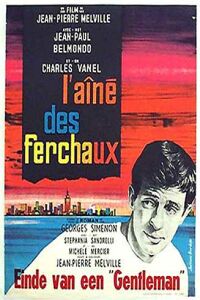
The Marquee

aka "Magnet of Doom" - Jean-Pierre Melville, 1963

Tuesday, May 09, 2006

Sullivan's Travels

I just realized that I’ve not yet written about a comedy. To remedy this, I’ve decided to look at one the giants of Hollywood – Preston Sturges. That name wouldn’t ring a bell to most modern filmgoers, but during WW2, everything he touched turned to gold. I considered doing "The Great McGinty" from 1940, with Brain Donlevy as a mob leg-breaker who develops a social conscience, or perhaps the divorce-for-profit farce "The Palm Beach Story" from 1942. Both these films are gems, but neither is my favorite Sturges. That would be "Sullivan’s Travels", from 1941.

The Sullivan is John L Sullivan (Joel McRae), successful Hollywood film director. As the film opens, Sullivan is trying to pitch his new picture "Brother, Where Art Thou" to two studio types. They are skeptical, because Sullivan’s stock in trade is the light romantic comedy, and the new movie is supposed to be a serious social drama.

"I want this to be a picture of dignity…a true canvas of the suffering of humanity!" One of the studio execs snorts "What do you know about suffering?" and that stops Sullivan in his tracks. He has to admit that he doesn’t know anything and that hatches an idea in his head – He’ll pose a bum, and go out in the world to see how the poor live. This will give him the credibility to make his movie.

Thus we see Sullivan the next day walking down the road in hobo gear – followed by a fully furnished motor home filled with studio personnel. Sullivan hitches a ride with a young kid in a dune buggy and tries to lose the entourage. This sequence is a marvel of slapstick comedy as the motor home tries to keep up to the speeding dune buggy, and is reduced to a shambles in the process.
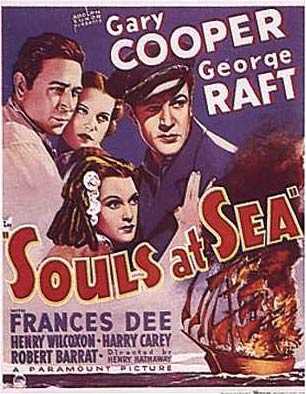
This fiasco just strengthens Sullivan’s resolve and he is able to convince the studio that they don’t have to have him followed. So off he goes again. We next see him chopping wood for a couple of women, and it soon becomes clear that the women don’t want him exclusively for chores, going so far as to lock him in his room. He makes his escape with that oldest of movie clichés – The rope made of bedding.

A breakfast stop at a roadside diner leads to a meeting with a down-on-her-luck wannabe actress (Veronica Lake), and the two strike up a friendship over coffee. What’s marvelous in this scene is the way that Sullivan keeps his secret from the girl, despite the fact that he really, really wants to tell her who he is.

"Give me a letter of introduction to Lubitsch."

"I might be able to do that – Who’s Lubitsch?"

The girl decides to go along with Sullivan on his travels (She knows the truth by now), and he starts making plans to jump a freight train. There’s a terrific moment when Sullivan’s butler calls the railroad office. "If a hobo were going to jump on the 5:48 train, where should he do it from?"

With Sullivan and the girl hopping trains and travelling around the country, Sturges takes a step back and lets us experience the journey as they do. We see hobos everywhere, sleeping outdoors and grabbing meals where they can. The Depression was still fresh in everyone’s minds in 1941, and we are quietly reminded of the devastation it caused.

This trip gives Sullivan the experience that he thinks he needs, but he makes the fateful decision to go out one last evening and distribute money to the tramps. The result is that he is beaten, robbed, and thrown unconscious onto a freight train. To top it all off, a violent altercation with a railway worker gets him thrown in jail.

Sullivan’s stint in jail leads to the scene that is the centerpiece of the film, when the convicts go to a "picture show" at a black church. They march in slowly, in chains, to the sounds of the congregation singing. The lights go down, and the audience is treated to a Disney cartoon of Pluto fighting a losing battle with a sheet of flypaper. The convicts roar with laughter and eventually so does the movie director who was tired of making comedies.

John L. Sullivan the director comes to realize that there isn’t anything wrong with giving people something to laugh at. Preston Sturges the director has it both ways. His films are textbook slapstick comedies, with pies in the face and people falling into rainbarrels, but he also dished out a little medicine with the sugar.

Sunday, May 07, 2006

Tuesday, April 18, 2006

Onibaba

The opening images of Kineto Shindo’s 1964 masterpiece “Onibaba” are soothing – A plain covered with long grass swept by wind. This is captured in gorgeous black and white photography, but it’s misleading. This isn’t a soothing story by a long ways. It’s a story that’s shot through with blood and sex.

The film centers on two women – an older one and her young daughter-in-law – and their needs are absolutely primal. They begin every day with the task of surviving, and they have developed a grisly commerce. They ambush and murder wandering samurai, and steal their weapons and armour to exchange for food. Indeed, the films’ opening images illustrate their handiwork, as two ronin are killed, stripped, and dropped into a deep pit.

The two woman soon encounter the vagabond soldier Hachi, a friend of the old woman’s son Ushi. He has returned from fighting in the wars that are raging throughout the countryside, and he tells tales of how he narrowly escaped death and how Ushi wasn’t so lucky. Hachi is loud and exaggerated, and gives the impression of being one not to be trusted. The women certainly don’t, as they treat him with distain. They want to know about the death of Ushi, and if Hachi could have prevented it. The old woman later tells the daughter-in-law exactly what’s on her mind.

“He may have killed Ushi himself.”

It’s a second encounter with Hachi, however, that first lets us in on where the story is headed. The younger woman is sitting by a lake, pounding some laundry with a stick, when Hachi appears. He talks to the girl, and it’s obvious from watching his eyes that he desires her, as she sits barelegged and spread-eagled on the dock. The older one sizes him up immediately, and warns her. “He wants you.” Thus begins the bizarre triangle – the lecherous Hachi pursues the younger woman, and the older one desperately tries to keep him away.

Ah, but it’s not quite that simple. The younger woman succumbs to her needs and begins to visit Hachi in his hut at night. The older one follows her and watches as they have sex. She runs away from the scene and then stops and grasps her breasts then wraps herself around an old dead tree. The camera pans up the tree, and the sexual symbolism is unmistakable. Her primal urge to maintain her way of life is being challenged by another – her desire for sex.

The following day she goes to visit Hachi and finds him sleeping in the grass. The contradictions in the old woman are brought right to the surface in this brilliant sequence. She derides him as a useless bum as he sleeps, then wakes him and tries to induce him into sex. Shindo shoots Hachi lying on the grass, with only her bare leg visible, and then shoots her from below stepping over and straddling him. This subtle suggestion of sexual tension is masterfully done.

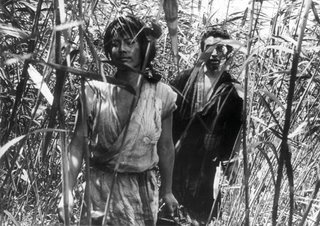
The tale takes a bizarre twist with the introduction of another character – A mysterious samurai who wears a hideous demon mask. The samurai asks the old woman to show him how to get to the main road. As the two wind their way through the long grass, the stranger tells why he wears the mask – to protect his face in battle, because he is extraordinarily handsome.

The old woman leads him directly into the pit, and he falls to his death. She climbs down into the hole to retrieve his valuables, and predictably succumbs to curiosity about this handsome face. She pulls the mask off with some difficulty, and in doing so seals her fate.

The following evening the young woman sets out through the grass for her rendezvous with Hachi, and in a hugely frightening scene, comes face to face with the demon. It’s not hard to figure out what’s going on here – The old woman is using the mask to frighten the younger one away from Hachi, but this takes a tragic twist on a rainy night. The young woman again sees the demon, and runs back home. She slowly gets a fire going in her hut, and the emerging light illuminates a huddled figure on the floor, back turned. The figure slowly turns and is revealed as the demon again. The masked figure starts to plead – “It’s me!!!!” “I can’t get it off!!”

It is revealed to the young woman that the old one has been scaring her, and that the mask had gotten attached to her face – Just as it did the samurai. The old woman pleads to have it taken off and in a chilling scene, the young woman tries to break the mask with a hammer as the old woman screams and cries.

The conclusion of “Onibaba” does not leave you with a neat resolution. Hachi meets his end at the hands of the last person in the world he expected to see, but for the women, it’s a bit unclear. Let’s just say the pit figures into things again.

What a frightening and imaginative thriller this film is! It was done on a budget of next to nothing, but creates images that are impossible to shake. There are no special effects, and no cheap scares. “Onibaba” creates its atmosphere through lighting, location, music, and character…and that brilliant demon mask.

Monday, April 17, 2006

The Red House

I have a notion to try and introduce a new film genre. This genre exists somewhere amongst film noir, the family drama, and the horror film – of the 40’s and 50’s. The films have the veneer of happy, well-adjusted family life, but there are terrible forces lurking underneath. You can go back to stuff like the old Ronald Reagan film “King’s Row”, and through movies like “Night of the Hunter”, “Hush, Hush, Sweet Charlotte”, and “Blue Velvet” right up to “A History of Violence” today. I’m going to call them “Norman Rockwell Gothic”.

That brings me to “The Red House”, a lesser known little marvel from 1947, directed by Delmer Daves. It is set in an idyllic little farming community, where the schoolkids wear letter sweaters and use the word “gosh”, and where farmers wear a suit to the dinner table. It’s the kind of portrait Rockwell would have come up with, but buried under its surface are lust, madness, and murder.

Farmer Pete Morgan (Edward G Robinson) lives on a quaint little farm with his sister, and his adopted daughter Meg. The Morgans are a nice bunch, but their isolation means that the townspeople talk and gossip about them, as their young hired hand Nate tells them his first day on the job. Nate says the rumour is that Meg’s parents ran off, but Morgan gently tells him that isn’t true - that they were killed in a car accident.

This first visit by Nate also provides the first indication that there’s something not right around the Morgan place. After dinner, Nate starts out for home and casually mentions that he’s going to take a short cut through the Ox-Head Woods. Morgan tries to dissaude him, gently at first – but then more forcefully and finally in a panic.“Nothing will prepare you for the screams that you will hear for the rest of your life!”

“Screams from where?”

“From the Red House!”

Nate won’t be talked out of it, and sets out at night with a gale force wind blowing. Once in the woods, of course, he hears or thinks he hears the screams, and the film brilliantly evokes a sense of disorientation and panic. The shaken teen ends up back at the Morgan place for the night.

Nate is not the type to scare easily, and the experience in the woods makes him really curious about the red house, and what is spooking Pete so much. A second trip into the woods results in being knocked unconscious after getting attacked by an unseen assailant.

Soon afterward, there is a meeting in the forest between Morgan, and Teller, a shadowy hunter that we have met briefly at the start of the film. It is revealed that Teller has been given hunting rights in the woods, in exchange for “Keeping trespassers out”. The attack on Nate is thus explained, but this also amps up our curiosity about the red house, especially when Morgan tells the hunter, “I don’t want to see anyone hurt, but if a bullet were to just miss someone….”

Meg has by now begun to act upon her own curiosity about the red house, and whilst on a walk by herself, actually finds it. There is no masking the fact that Meg has some connection to the house, as Theremin music wells up on the soundtrack, and her attention is drawn to the farm’s icehouse. She relates this experience to Nate. “ I don’t know how I know it was the ice-house, but I just do."

Morgan begins to lose his grip on reality as the two teens get closer to the secret of the red house. In visiting Meg in her room, he makes a telling slip, calling her “Jeannie.” This goes uncommented upon, but in a later exchange at the swimming hole, Morgan appears to suffer a breakdown, as he addresses Meg as Jeannie again. This time it’s clearly not just a slip – He actually is speaking to Jeannie, and Meg has now figured it out.

Meg ventures back to the red house, this time going inside, and she now understands that it was her home once upon a time. Morgan follows her there.

“Who is Jeannie, Pete? Is it short for Genevieve? My mother?”

Finally, Morgan spills his terrible story – About a woman who he loved and how he came to kill her and her husband, and how he disposed of their bodies in an icehouse.

Robinson is simply marvelous in this role, as he was in most of his roles. He watches with mounting unease as his past comes back to destroy him, and in his final act, sits stonefaced as the water in the icehouse comes up and over him. There’s a tiny, but perfect little coda, as well. As Morgan truck goes under the water, a lone surrey wheel floats to the surface – A reminder of a long-ago crime finally uncovered.

Footnote: A couple of points. I mentioned the use of the Theremin on this soundtrack. It might seem a strange choice, but the way it creates unease and tension is invaluable.

Also, as great as this film is, it has a lot of padding. There is a silly subplot about Nate’s mother which should have been taken right out, and there’s another about Nates girlfriend Tibby and Teller, which is notable only for the presence of a white-hot young Julie London

.